
2026 Legislator Impact Report
FOR NOW...
The Legislative Scorecard Is On Hold

During its 2026 short session, North Carolina's General Assembly filed more than 540 bills, with just 54 becoming law. Four senators were the primary sponsors of more than half the Senate legislation, while the budget combined dozens of policy priorities into a single vote. Lawmakers returned for an October special session, with more activity possible before year's end.
North Carolina has become nationalized, not just in the issues dominating debate, but in how governing gets done. Omnibus bills, conference committees carrying multiple priorities, and party-line votes on high-profile overrides have long been standard practice in Washington. Now they're increasingly shaping how the legislative process unfolds in Raleigh.
That shift changes how the NC Chamber informs North Carolina's business community and it's why, for now at least, we're retiring How They Voted. For more than a decade, our legislative scorecard gave employers a straightforward way to understand where lawmakers stood on policies shaping North Carolina's business climate.
It served an important purpose, but the legislative process has changed.
The NC Chamber's 2026 legislative agenda included nearly three dozen priorities identified by employers across the state. Yet only one House vote and one Senate vote met our longstanding transparent and objective standard for How They Voted, which is to only measure votes on clearly defined business issues on which every legislator had the same opportunity to take a position.
The biggest decisions were negotiated over months, packaged into conference reports, and folded into legislation that offered lawmakers a single vote on multiple priorities.
North Carolina’s business community deserves more than a scorecard that captures only a fraction of the picture.
Our responsibility is to provide employers the context and intelligence they need to understand how policy is made, who is shaping it, and what it means for their business.
The NC Chamber is moving beyond the traditional legislative scorecard because accountability matters as much as ever, and accuracy matters more than tradition. The 2026 Legislator Impact Report recognizes lawmakers whose leadership helped advance policies that strengthen North Carolina's business climate, support job creation, and expand economic opportunity. We appreciate their partnership and look forward to continuing our work together to advance North Carolina's competitiveness and prosperity.
Gary J. Salamido
President & CEO
2026 Policy Impact
The NC Chamber's legislative agenda is developed with input from employers across North Carolina. It reflects the policies businesses need to remain competitive, invest in their operations, and create opportunities for North Carolinians. The following outcomes illustrate how business engagement and legislative leadership translated into meaningful progress in 2026.
Protecting North Carolina's Civil Justice System
House Bill 315 | Third-Party Litigation Investment
WHAT CHANGED: In a first-in-the-nation victory led by the NC Chamber, North Carolina enacted legislation banning third-party litigation investment, a practice in which outside investors fund legal proceedings in exchange for a financial return tied to the outcome. The prohibition applies to civil lawsuits, arbitration, mediation, and administrative proceedings, addressing concerns about transparency, rising litigation costs, national security, and the protection of sensitive business information and intellectual property.
WHY IT MATTERS FOR BUSINESS: For North Carolina businesses, the law is intended to reduce outside financial influence on litigation, encourage more predictable dispute resolution, strengthen protections for proprietary information, and provide greater certainty when planning for legal expenses. Together, these changes are designed to reinforce confidence in North Carolina's civil justice system.
Expanding ChildCare Access and Strengthening the Workforce
Senate Bill 257 | Childcare Funding and Regulatory Reforms in State Budget
WHAT CHANGED: The state budget included several measures recommended by the NC Chamber Foundation’s 2025 Addressing North Carolina’s Childcare Crisis report, designed to address the availability, affordability, and sustainability of childcare in North Carolina.
Among the investments were $97 million annually to update subsidy reimbursement rates to 2023 market levels and establish a statewide reimbursement floor, helping support providers serving rural and lower-income communities. The budget also included $1.5 million for the Career-Ready Lead Teacher Academy, $7.3 million for Smart Start mental health services, and $350,000 for a Department of Insurance study examining rising liability insurance costs.
WHY IT MATTERS FOR BUSINESS: When parents cannot find or afford reliable care, employers face challenges recruiting and retaining talent. At the same time, providers need a sustainable business environment and a dependable pipeline of qualified educators. These reforms address both sides of that equation, helping parents participate in the workforce while supporting the providers and educators who make that participation possible.
Preserving a Predictable Labor Environment
Senate Bill 257 | Protecting Consistent Labor Policies in State Budget
WHAT CHANGED: Budget provisions reinforced North Carolina's longstanding right-to-work framework by limiting local government actions that could pressure employers to make union-organizing concessions as a condition of receiving assistance with business operations. The provisions also clarify restrictions on local governments indirectly delegating control over private-sector wages and benefits to unions.
WHY IT MATTERS FOR BUSINESS: Employers depend on consistent rules when making decisions about hiring, compensation, investment, and expansion. Maintaining a predictable statewide labor policy helps businesses plan with greater confidence and reduces the potential for conflicting local requirements.
Defending a Competitive Tax Environment
Senate Bill 474 | Preventing an Uneven Business Tax Burden
WHAT CHANGED: During negotiations over Senate Bill 474, the NC Chamber advocated successfully for the removal of language that would have created an uneven tax burden for North Carolina businesses.
WHY IT MATTERS FOR BUSINESS: A competitive tax environment depends on fairness, predictability, and consistent treatment. Preventing provisions that create disparities among businesses is an important part of protecting North Carolina's reputation as a place where employers can invest and grow with confidence.
This outcome demonstrates why business engagement matters throughout the legislative process, not simply when bills come to a final vote.
Recognizing Pro-Business Leadership
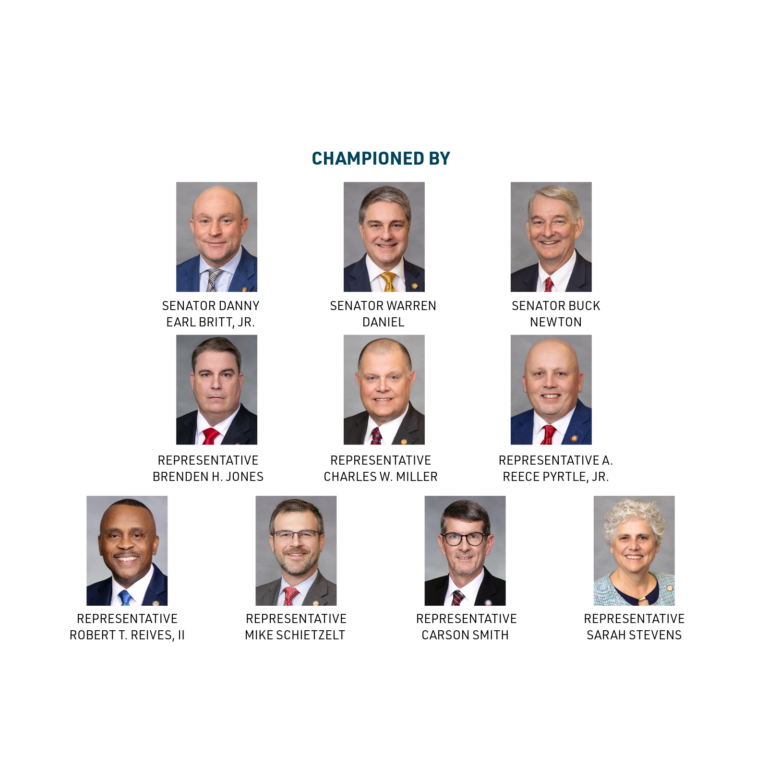
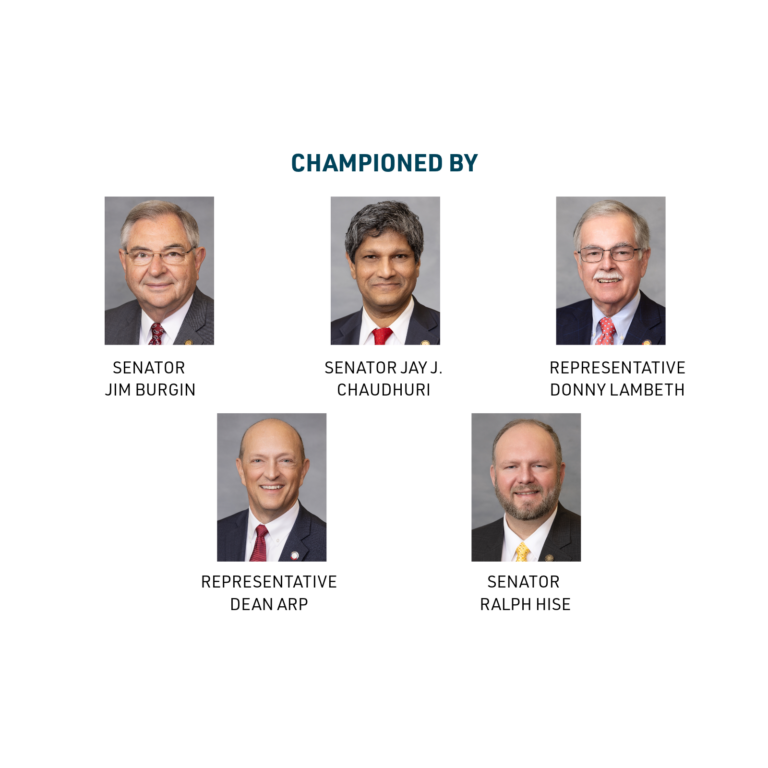
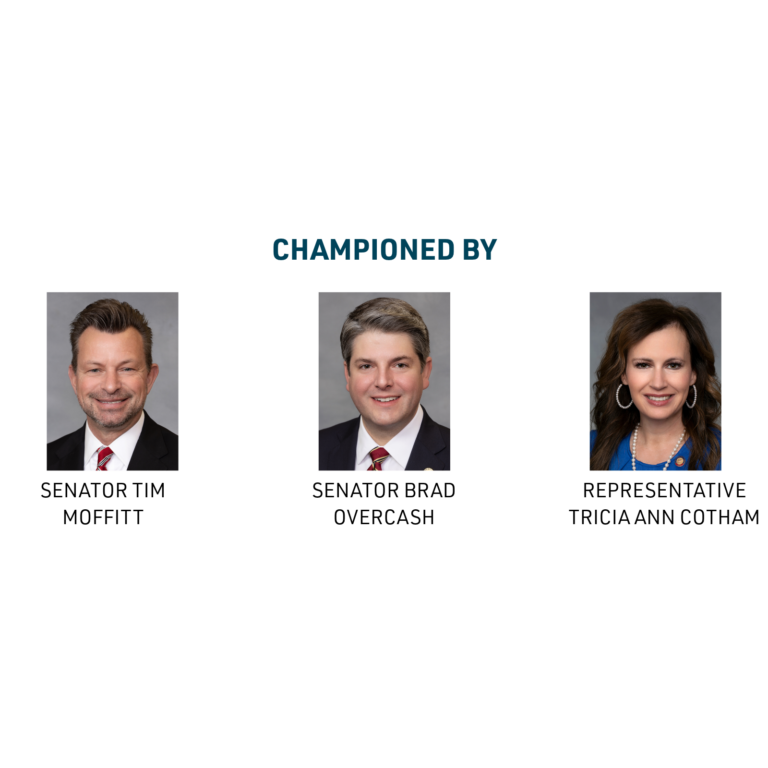
Good policy requires engagement, collaboration, and a willingness to work through complex issues. The NC Chamber recognizes leaders who have worked with the business community to advance policies supporting North Carolina's long-term economic competitiveness. The NC Chamber is proud to recognize the following legislators for their engagement and contributions to a pro-growth business environment.
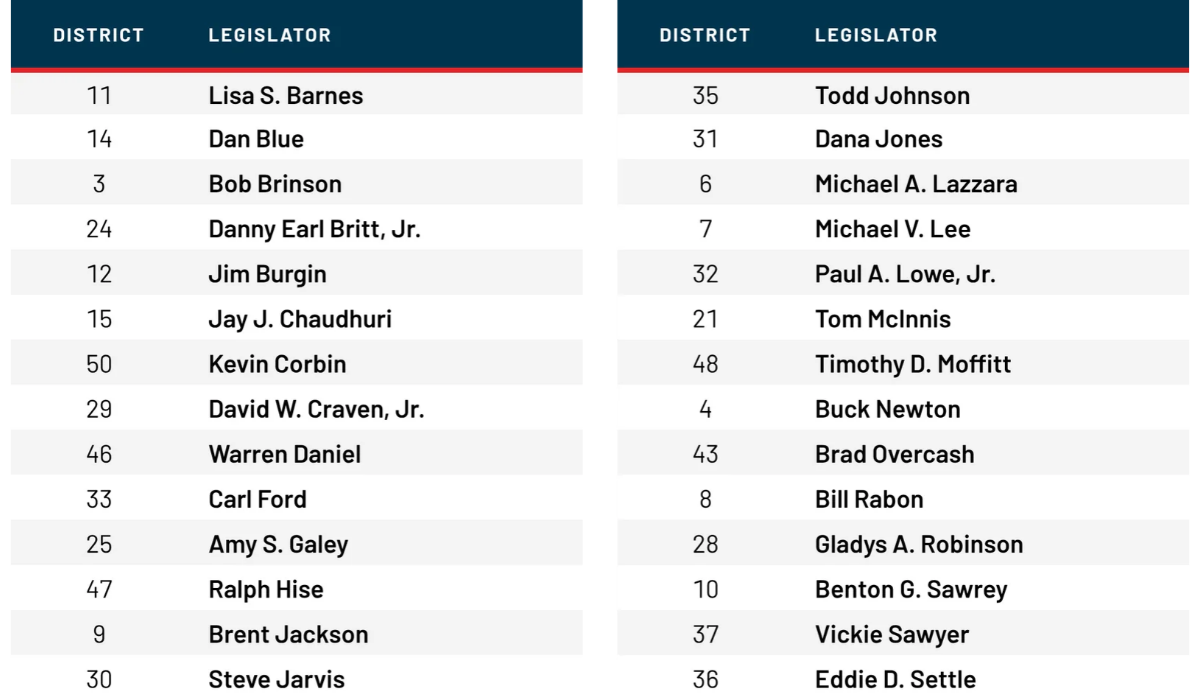
NC Senate
Recognition reflects legislative engagement and contributions identified by the NC Chamber. It is not a numerical score or ranking of individual legislators and does not equate to an endorsement of a legislator’s future candidacy by the NC Chamber, NC Chamber PAC, or any other entity affiliated with the NC Chamber.

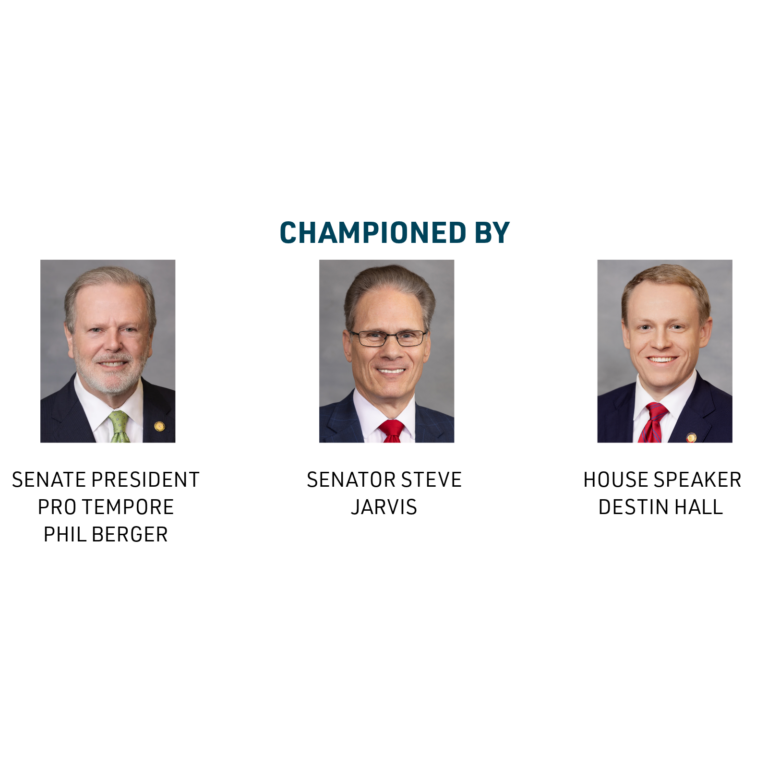
Special Thank You
Senator Phil Berger has played a defining role in shaping North Carolina’s modern economic story. Many of the policies that helped position our state as one of the nation’s top places for business were debated, refined, and advanced during his leadership in the Senate.
At the NC Chamber, we value leaders who engage seriously on the issues that drive economic growth and opportunity, and we have always appreciated Senator Berger’s willingness to have thoughtful, candid conversations about the future of our state.
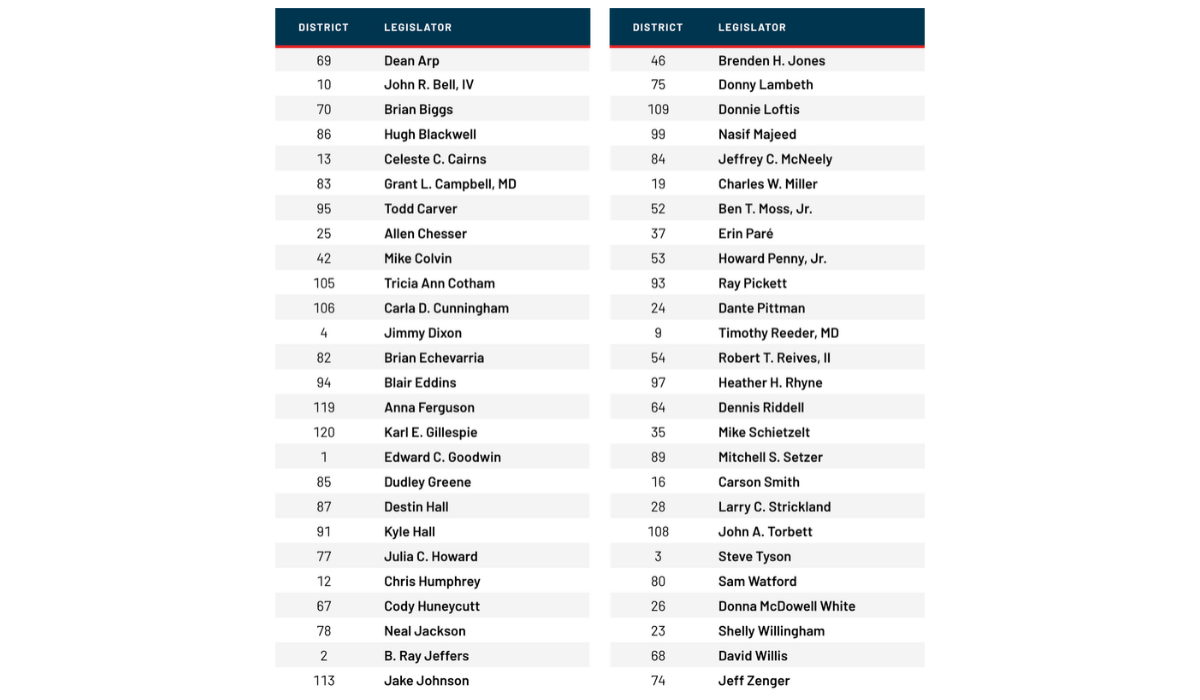
NC House
Recognition reflects legislative engagement and contributions identified by the NC Chamber. It is not a numerical score or ranking of individual legislators and does not equate to an endorsement of a legislator’s future candidacy by the NC Chamber, NC Chamber PAC, or any other entity affiliated with the NC Chamber.
UNFINISHED BUSINESS
The Work Ahead
North Carolina has earned its position as a leading destination for business investment, job creation, and economic opportunity. But our continued success is not guaranteed. A growing population, expanding economy, and intensifying competition for investment demand that we build on our strengths while addressing the challenges that could limit future growth.
Our workforce remains one of North Carolina's greatest competitive advantages. We must maintain and strengthen our education and talent supply pipeline, better align training with employer demand, and remove barriers that keep people from participating in the workforce. That includes confronting housing shortages that make it increasingly difficult for workers to live near the jobs our economy is creating.
Infrastructure will be a focus. Reliable, affordable energy, adequate water and wastewater capacity, and transportation networks that keep people and goods moving are essential to our competitiveness. Transportation funding, in particular, demands renewed attention. The recent gas tax holiday underscores the urgency of developing a sustainable, long-term funding model that can support North Carolina's growing transportation needs.
We also have significant opportunities to position North Carolina for the next generation of investment. Through First in Defense, we are working to make North Carolina a more attractive destination for defense manufacturing, innovation, and federal investment. We will continue advancing civil justice reforms toward our goal of establishing a top-10 legal climate, providing employers with the predictability and certainty they need to invest, operate, and grow.
These priorities, among numerous others, are interconnected. Infrastructure supports investment, talent fuels growth, a competitive legal climate encourages job creation, and strategic investments in emerging industries open new doors for communities across all 100 counties.
As we look toward 2027, the NC Chamber will work with policymakers to advance data-driven policies that address these challenges and capitalize on the opportunities ahead. Our focus is not simply on maintaining North Carolina's standing, but on strengthening the fundamentals that will sustain it for decades to come.
Meet the NC Chamber's Government Affairs Team arrow_forward
2026 Legislator Impact Report
The policies, partnerships, and legislative leadership shaping North Carolina’s business climate.
Download a PDF of the Full Report