
Building Culture Leaders: How NCHCFA is Transforming Long-Term Care in North Carolina
The NC Chamber Foundation and the NC Center on the Workforce for Health formally launched the landmark NC Health Talent Alliance public-private partnership in 2023 to aggressively address the state’s critical health care workforce shortages. By leveraging the U.S. Chamber Foundation’s proven Talent Pipeline Management® (TPM) framework, the Health Talent Alliance works to fill critical health sector roles by building robust talent pipelines aligned with industry demand.
The work of the Health Talent Alliance is advanced not only by growing the pipeline, but also by ensuring health care professionals in the field have the support they need to thrive. Programs like the North Carolina Health Care Facilities Association’s Building Culture Leaders Grant support this initiative because burnout and turnover are among the biggest threats to retention. Strengthening leadership, improving workplace culture, and reducing burnout are essential complements to recruiting more workers—critical steps toward building a sustainable health care workforce for our state.
In an era where the demand for compassionate, high-quality long-term care is reaching unprecedented heights, the North Carolina Health Care Facilities Association (NCHCFA) has launched an innovative initiative to reshape the organizational culture of skilled nursing facilities across the state. FutureCare NC, a not-for-profit established by the NCHCFA, was recently awarded a $380,000 grant from the Centers for Medicare and Medicaid Services. Over the course of three years, this grant will fund the innovative Building Culture Leaders Program—an effort aimed squarely at equipping long-term care leaders with the critical knowledge, skills, and mindset necessary to foster thriving, resident-focused workplaces.
The heart of the Building Culture Leaders Program lies in its commitment to transformative leadership. Mark Gogal, vice president of workforce development, and Eric Kivisto, director of quality improvement programs for NCHCFA, are the driving forces behind Building Culture Leaders. They bring a clear and compelling vision: “The goal is to tap into and enhance the passion of being a leader.”
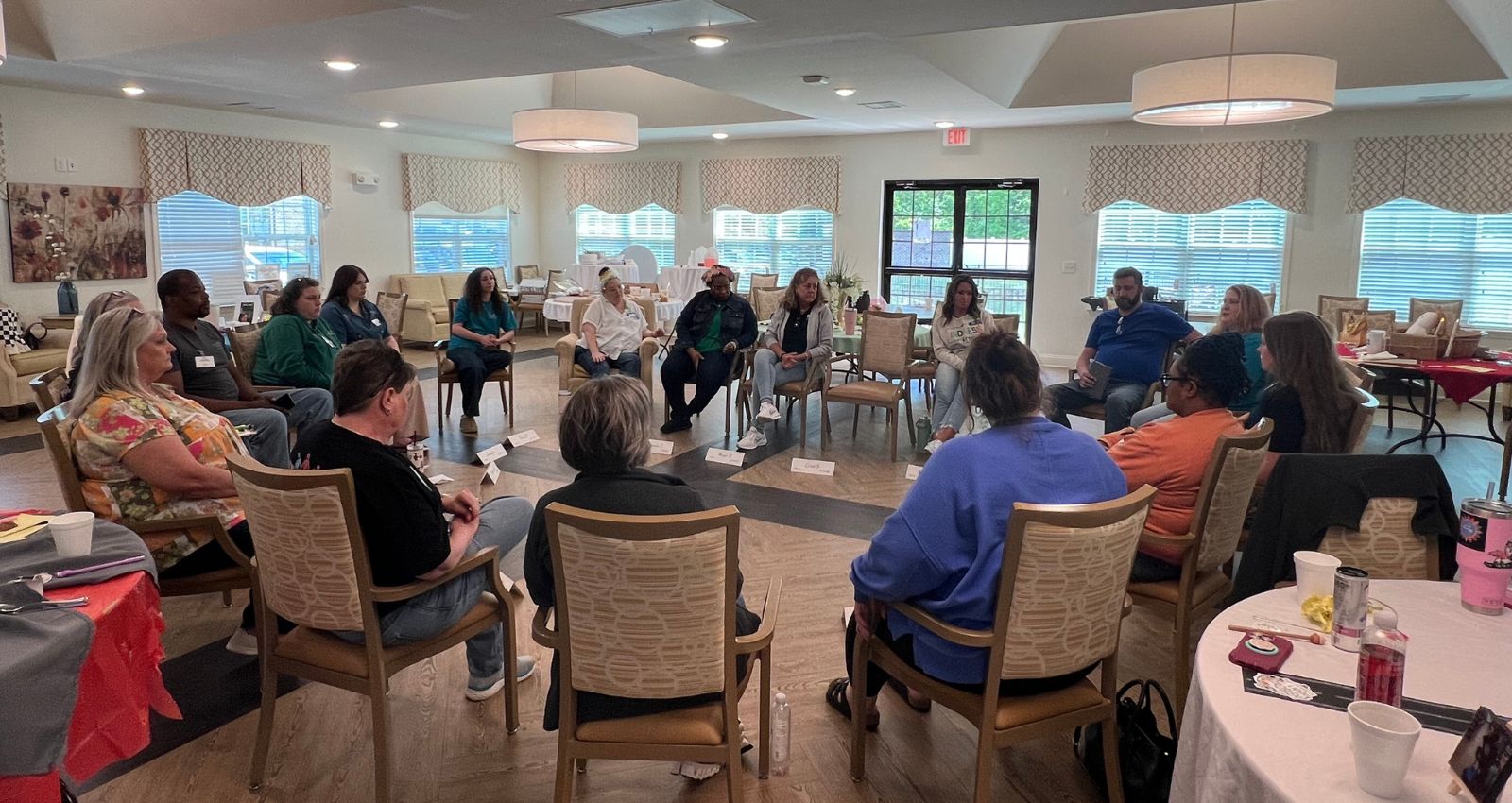
Building Culture Leaders uses a hands-on approach. Unlike traditional models that rely solely on offsite training, the program brings training directly to each facility via two-day site visits. Over the past eight years, Gogal and Kivisto have been teaching the NCHCFA Leadership Institute, reaching 20 to 25 leaders annually. The goal is to broaden this impact thanks to additional grant funding.
The numbers alone underscore the magnitude of this initiative. Forty skilled nursing facilities across North Carolina were carefully selected by their corporate offices to participate, and the program is set to directly impact over 1,500 leaders and staff members. Through a blend of in-person training, individualized coaching, onsite workshops, and team-building exercises, the program aims to empower these leaders to build and sustain organizational cultures rooted in resident-centered care.
The objectives are ambitious: by the end of the three-year period, the Building Culture Leaders Program aims to increase resident and family satisfaction in quality of care and quality of life by 15% in participating facilities. Additionally, at least 75% of participants are expected to report measurable improvements in their organizational culture-building and leadership skills.
Nothing demonstrates the program’s value better than the experiences of leaders who have embraced its teachings.
Ashley Jones, administrator at Abernethy Laurels in Newton, NC, has been with her facility for 12 years, overseeing health care, assisted living, and memory care services for 400 residents and a similar number of staff. For Jones, the impact of the initiative is unmistakable. Retention, always a critical challenge in long-term care, has seen remarkable improvement. Jones shared hard data: “In October of 2024, our turnover rate was 3.82%. As of July 2025, it is now 2.4%.”
Jones attributes this success to the leadership principles she and her team learned via Building Culture Leaders, especially the focus on open communication, vulnerability, and support. “Am I still meeting your needs? Are you still getting what you need from me?”
Janet Hogue, Administrator at Liberty Commons Nursing and Rehabilitation Center of Johnston County, echoes these sentiments.
Through the Building Culture Leaders Program, Hogue found a framework for instilling trust and accountability. The results are significant. “Staff are more engaged in meetings, and we are more cohesive as a team. As a result, we are having better resident outcomes,” Hogue says.
Hogue also tracked measurable changes in retention: “My turnover from January, February, and March was 15.04%. That has decreased to 11.51% in the second quarter following the completion of the Building Culture Leaders program.”
The Building Culture Leaders Program is more than a training regimen; it is a movement to fundamentally reshape the employee experience in skilled nursing facilities throughout North Carolina. Gogal’s approach emphasizes servant leadership: “Your job as a leader is to lift your staff. Your staff’s job is to lift the residents. That’s the theme I try to relay in the trainings.”
The initiative’s focus on self-awareness, effective communication, conflict resolution, and team dynamics has reverberated through participating organizations.
As Jones observed, “Leadership development is so important, and not only from the top, but also at middle management. Sometimes that’s where we miss the mark. Do supervisors have the tools they need? Do they know how to most effectively talk to their staff members?”
Team development sessions, leadership book clubs, and ongoing workshops are now the norm in these facilities that have completed Building Culture Leaders—a testament to the program’s commitment to sustainability and continuous growth.
For North Carolina, the implications of this program reach far beyond the walls of any single facility. The state’s skilled nursing sector faces growing demands and a shrinking workforce. As Gogal observes, “There’s more demand for health care professionals. The organizations that employ them need to understand the importance of developing and invoking an environment and culture that people want to be part of, and it starts with the leader.”
In building a model where leadership, culture, and retention are valued as much as technical expertise, NCHCFA is creating a blueprint that other states may one day follow. The Building Culture Leaders Program stands as a testament to the power of vision, collaboration, and the unyielding belief that, by investing in people, we can uplift not only the caregivers and residents of today, but the entire future of care in North Carolina.