
Passenger Rail’s Vital Role in North Carolina’s Supply Chain
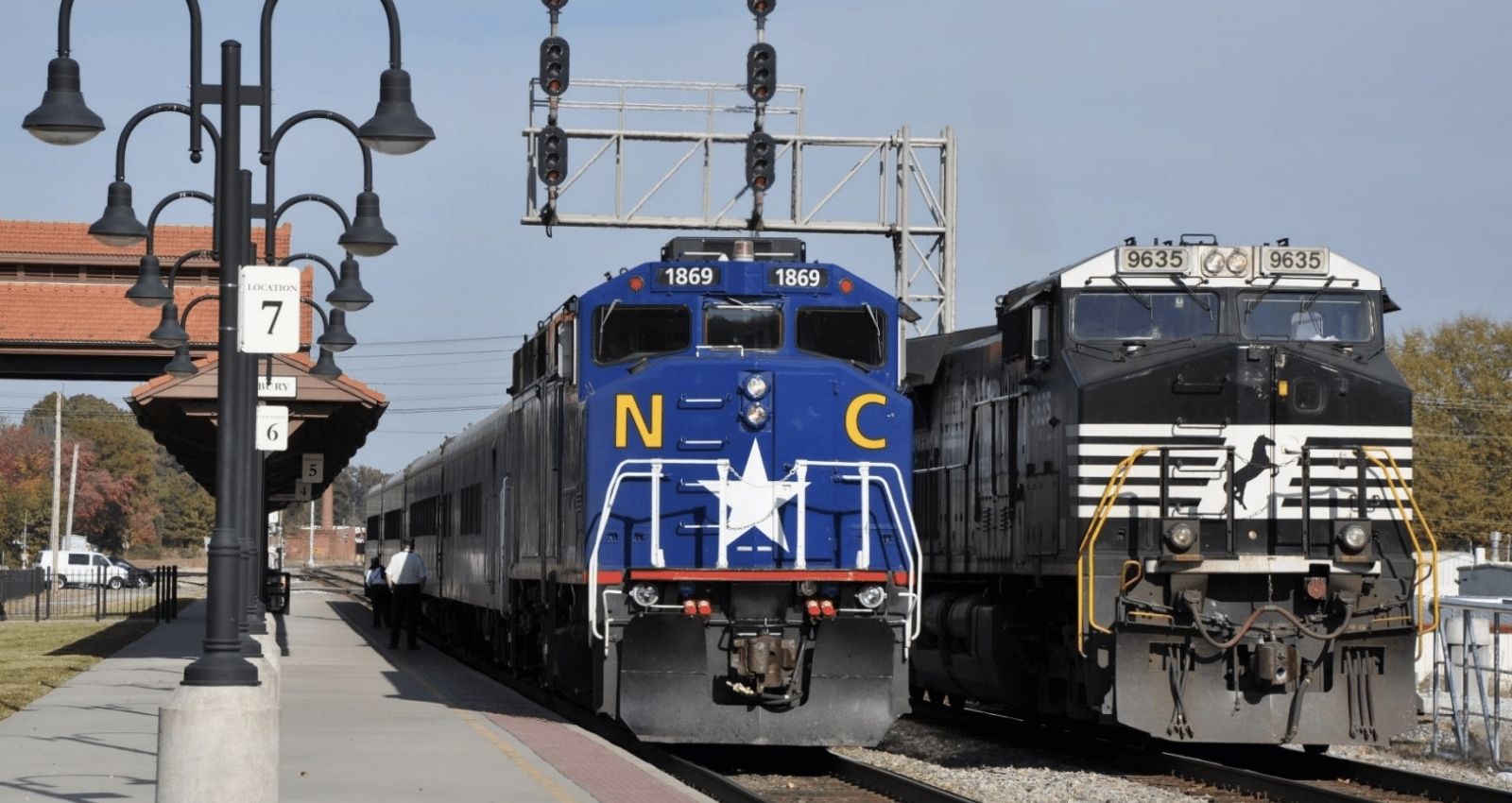
NC Chamber Foundation Senior Director of Infrastructure Competitiveness Dana Magliola highlights the often-overlooked economic benefits of passenger rail in North Carolina in a recent guest post for All Aboard NC, a coalition advocating for sustainable investment in North Carolina’s rail network. While freight rail often receives more attention in logistics discussions, passenger rail investments strengthen the same rail corridors, labor markets, and regional connections upon which manufacturers, distributors, and service industries rely. From workforce mobility to reduced highway congestion and expanded labor market access, Dana details how passenger rail supports a more connected, resilient, and competitive economy.
Passenger rail plays a meaningful and often under-appreciated role in supporting North Carolina’s supply chain and industrial economy. While freight rail understandably receives much attention in logistics discussions, passenger rail investments strengthen the same rail corridors, labor markets, and regional connections upon which manufacturers, distributors, and service industries rely. Statewide research shows that North Carolina’s rail system generates more than $20 billion in annual economic output and supports approximately 88,000 jobs across freight, passenger, and rail-supported industries, underscoring how deeply rail is embedded in the state’s supply chain ecosystem (1).
Passenger rail directly supports workforce mobility, which is increasingly critical for industrial competitiveness. NC By Train and Amtrak services carry more than 520,000 passengers annually, with over 460,000 trips starting or ending in North Carolina, connecting major employment centers such as Charlotte, the Triad, and the Triangle (2). These connections expand labor sheds for manufacturers, logistics firms, and industrial employers who depend on consistent access to skilled workers. In growing regions where housing affordability and commuting distances are rising, passenger rail allows workers to reach jobs without adding pressure to already congested highways, helping employers recruit and retain talent essential to production and distribution operations.
Passenger rail also strengthens supply chain reliability by reducing congestion on roadways. Research indicates that passenger rail in North Carolina has diverted tens of millions of vehicle miles traveled from parallel interstate corridors such as I-40, I-85, and I-95, improving travel time reliability for trucks moving raw materials and finished goods. Even modest reductions in congestion can have outsized benefits for time-sensitive supply chains, lowering fuel costs, reducing delivery variability, and decreasing wear on vehicles and infrastructure for which businesses must ultimately pay.
The economic impacts of expanding passenger rail corridors further reinforce these supply chain benefits. A recent analysis of the proposed Salisbury-to-Asheville passenger rail corridor found that capital investment alone would generate an estimated 5,270 job-years, $1.05 billion in total economic output, and $33.6 million in state and local tax revenue during construction (3). Once operational, the corridor is projected to sustain more than 300 ongoing jobs and nearly $60 million in annual economic output, driven by rail operations, tourism, and expanded labor market access.
Importantly, higher levels of passenger rail activity also help support ongoing rail infrastructure maintenance and capital upgrades along shared corridors. A more economically active rail line strengthens the financial case for continued investment in track, signals, and stations, which in turn improves service quality and reliability for all users. Over time, these improvements can make rail access more practical and cost-effective for manufacturers and industrial users located along the corridor, lowering barriers to freight rail utilization and reinforcing the corridor’s role as a competitive, multimodal supply chain asset.
Taken together, the data make clear that passenger rail is not simply a quality-of-life investment. It is a strategic component of North Carolina’s broader supply chain and industrial development strategy. By strengthening shared rail infrastructure, expanding workforce access, and easing congestion on critical freight corridors, passenger rail investments complement freight rail, ports, highways, and intermodal facilities. As North Carolina continues to compete for advanced manufacturing, logistics, and clean energy investment, passenger rail should be viewed as an enabling asset that helps the state move people more efficiently so businesses can move goods more reliably and grow with confidence.
- Brock, Tim, et al. Economic Contribution of Rail in North Carolina. FHWA/NC/2022-19, Institute for Transportation Research and Education, NC State University/NCDOT, 11 August 2023.
- IBID.
- Garzon, Shelly. “Proposed Amtrak Rail Route Could Put WNC Back on Track for Train Travel, Boosting Tourism.” WLOS, 23 Dec. 2025.