
EPA Region 4 Administrator Highlights Federal Priorities at NC Chamber Environmental Compliance Conference
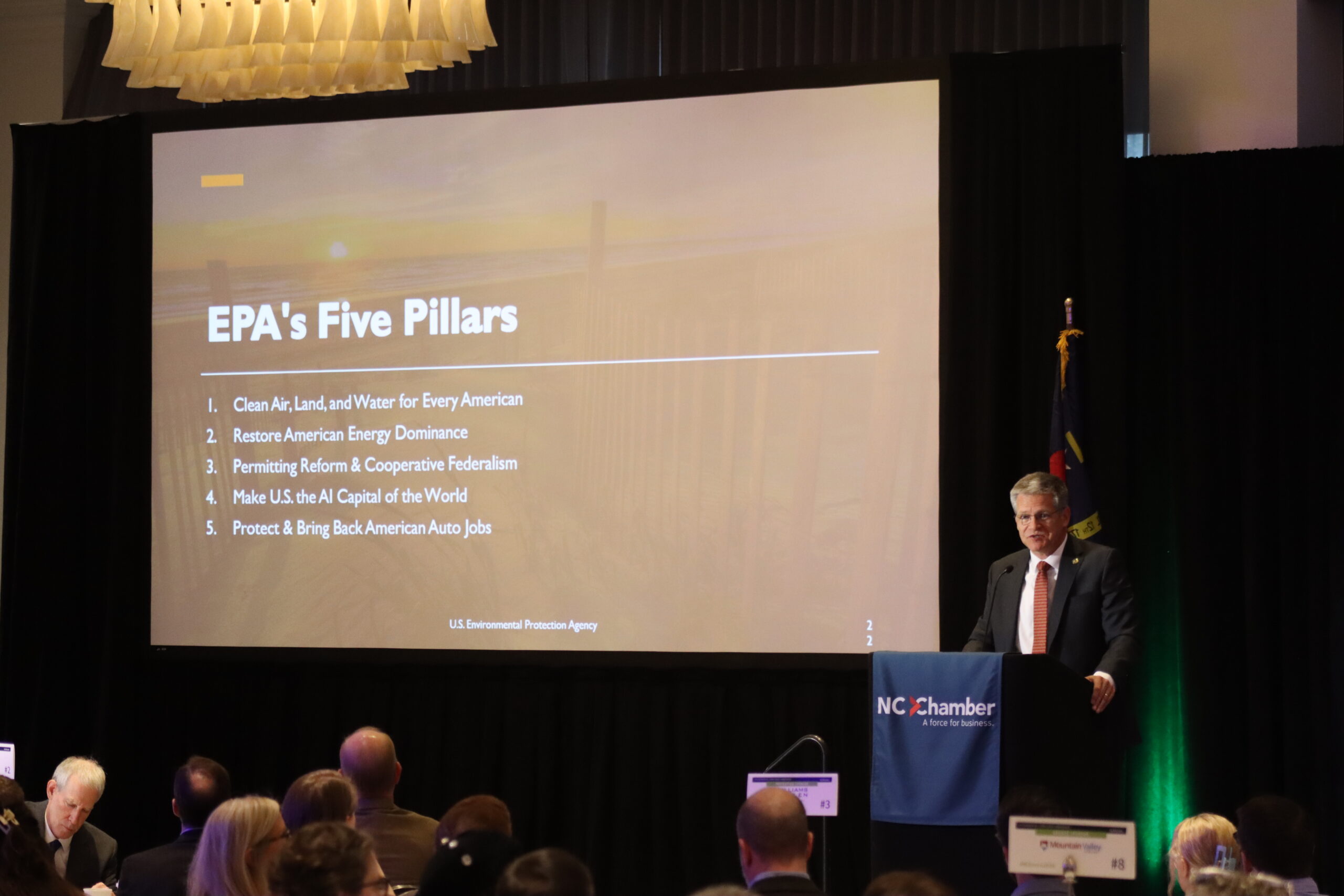
Protecting North Carolina’s environment while ensuring the state can continue to grow at the speed of business requires strong collaboration between regulators and the regulated community. That spirit of partnership was on full display at the NC Chamber’s 2026 Environmental Compliance Conference, where attendees heard from keynote speaker Kevin J. McOmber, P.E., Regional Administrator for U.S. EPA Region 4.
McOmber, who oversees EPA operations across Georgia, Alabama, Florida, Kentucky, Mississippi, North Carolina, South Carolina, and Tennessee, joined state and business leaders in Raleigh to share insights on federal priorities shaping environmental policy, energy development, and economic competitiveness across the Southeast.
His remarks reinforced a central theme for this year’s conference: strong environmental stewardship and economic growth can, and must, advance together.
EPA’s Five Pillars Shape Federal Direction
Administrator McOmber outlined the five pillars guiding EPA’s work nationwide, emphasizing how each connects to North Carolina’s economic growth and environmental leadership:
-
- Clean Air, Land, and Water for Every American
-
- Restore American Energy Dominance
-
- Permitting Reform & Cooperative Federalism
-
- Make the U.S. the AI Capital of the World
-
- Protect & Bring Back American Auto Jobs
McOmber noted that EPA is focused on balancing environmental protection with a strong and competitive economy. He noted collaboration with state partners like North Carolina is essential to achieving that balance.
“The most effective environmental protection happens when the federal government works in genuine partnership with the states. North Carolina is a prime example of that,” said McOmber.
AI, Energy, and Infrastructure: A Growing Focus
A major theme of McOmber’s remarks was the intersection of energy policy, emerging technology, and economic growth, an area the NC Chamber has long championed alongside federal and state partners.
He highlighted projections that the global artificial intelligence market will grow from $7 billion today to $48 billion by 2030, with data centers and advanced manufacturing driving new demand for reliable energy and infrastructure. For North Carolina, where advanced manufacturing investment and data center growth continue to accelerate, these trends underscore the importance of reliable energy, efficient permitting, and long-term infrastructure planning.
McOmber emphasized that meeting this demand will require strong coordination between federal and state partners. He pointed to EPA’s ongoing efforts to modernize permitting processes and strengthen collaboration with states to support responsible energy development and advanced manufacturing investment.
These priorities closely align with the NC Chamber’s work to support permitting reform, infrastructure investment, and reliable, affordable energy planning that enable North Carolina to remain competitive for advanced manufacturing and technology growth.
This work is further informed by the NC Chamber Foundation’s Business-Driven Energy Vision, a roadmap shaped by employers to guide North Carolina’s energy future. The report outlines the state’s evolving energy landscape and distills input from business leaders across industries into clear priorities for ensuring reliable, affordable, and increasingly clean energy — the foundation for continued growth, investment, and competitiveness.
Hurricane Response and Infrastructure Investment
McOmber also highlighted EPA Region 4’s role in supporting North Carolina’s response and recovery following recent hurricanes. Working alongside federal, state, and local partners, EPA helped safeguard water systems, manage hazardous materials, and support community recovery efforts across affected areas.
Looking ahead, North Carolina is positioned to receive approximately $685 million in State Revolving Fund water infrastructure funding to support drinking water, wastewater, and long-term resilience projects following Hurricane Helene. These investments will help communities strengthen resilience, support continued growth, and ensure reliable infrastructure for businesses and residents alike.
Collaboration is Key
Throughout his remarks, McOmber emphasized the importance of open dialogue between federal regulators, state leaders, and the business community. From permitting modernization to emerging technologies and environmental protection, he underscored that progress depends on strong partnerships.
The NC Chamber’s Environmental Compliance Conference remains one of the few opportunities each year for the regulated community to engage directly with regulators outside of formal permitting processes. Conversations like these help ensure North Carolina can continue protecting its natural resources while supporting economic growth and innovation.
Thank you to all who joined us for this year’s conference and contributed to the important discussions shaping North Carolina’s environmental and economic future. We look forward to continuing these conversations — and to welcoming more leaders from across the public and private sectors — at future NC Chamber events.
Sign up for NC Chamber event alerts to stay informed about future events and updates, including next year’s Environmental Compliance Conference.